
The Leadership Behind Early Interactive Web Archives
A record of the figures and curatorial methods that preserved the interactive design legacy of Exopolis.
Documenting the Exopolis Era of Digital Production
Archiving early browser-based entertainment presents unique technical hurdles. When preserving Flash-era experiments and playful interfaces, capturing static screenshots fails to represent the actual user experience. The interaction model itself—often highly experimental, requires rigorous documentation.
This necessity established a broader principle for our digital preservation efforts. The technical environment holds equal weight to the visual assets. Modern archival frameworks must reconstruct the underlying logic of these microsites rather than just their surface aesthetics.
We focus on mapping the interaction design workflows that defined this period. By analyzing the original file structures, we identify methods for cataloging complex digital artifacts. This points to a practical requirement: future archival efforts must prioritize functional emulation over static image capture to maintain historical accuracy.
Foundational Leadership and Curatorial Direction
The curatorial direction of this historical record stems directly from the studio's original executive structure. CEO Matt Hovis, along with founders Kat Egan and Daniel Arcana, defined the initial creative trajectory that we now document. Their prior work with agencies such as Action Figure and Milkshake Media heavily influenced the transmedia production approaches cataloged in our archives.
This leadership triad established a rigorous structural framework for commercial production. They navigated the transition from traditional broadcast to interactive digital spaces. However, the day-to-day motion pipelines frequently adapted to immediate project demands. Our current archival methodology accounts for both these top-down directives and ground-level technical improvisation.
Understanding this dynamic is essential for anyone researching Studio History & People. The organizational milestones reflect a continuous negotiation between executive vision and technological constraints.
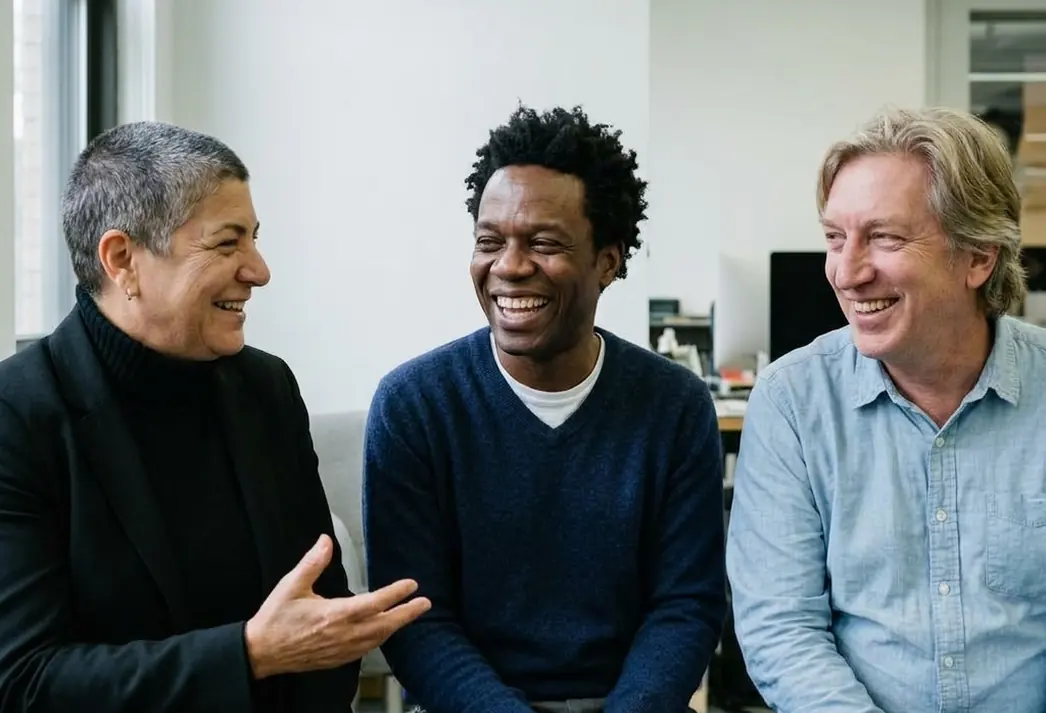
Matt Hovis
CEO
Guided the strategic expansion of the studio and established key agency partnerships.
Kat Egan
Founder
Directed transmedia production approaches and shaped the studio's creative culture.
Daniel Arcana
Founder
Led foundational design initiatives and integrated motion pipelines with interactive technologies.
Archival Scope and Methodological Limitations
How do we accurately catalog interactive experiences built on deprecated software architectures? Exploring this challenge involves dissecting both raw source files and compiled broadcast visuals. We analyze legacy motion graphics and VFX references to reconstruct the original animation direction.
Complete functional restoration of every branded creative system remains technically unfeasible due to missing dependencies. Finding an optimal solution requires balancing historical fidelity with modern accessibility. We currently rely on a hybrid system of high-fidelity video capture and code repository preservation.
While this hybrid approach captures the visual fidelity, it inherently sacrifices the tactile responsiveness of the original interfaces. This limitation forces us to prioritize which projects receive full emulation versus standard video documentation.
Creative Networks and Historical Partnerships
The studio's dual presence within the Austin and Los Angeles creative networks directly shaped its technical output. Ongoing collaborations with regional creative technology firms expanded the internal capabilities for complex brand campaigns. These multi-year partnerships allowed the team to execute ambitious interactive projects that required specialized programming knowledge.
This geographic integration highlights a related pattern in Digital Production Methods. Technical methodologies are inextricably linked to local professional networks. The availability of specific talent pools dictates the tools and workflows a studio adopts.
Consequently, our archival efforts must document these external agency relationships alongside internal organizational milestones. Providing an accurate historical context requires mapping the entire network of contributors, not just the core leadership team.