The Era of Pre-Algorithmic Digital Design
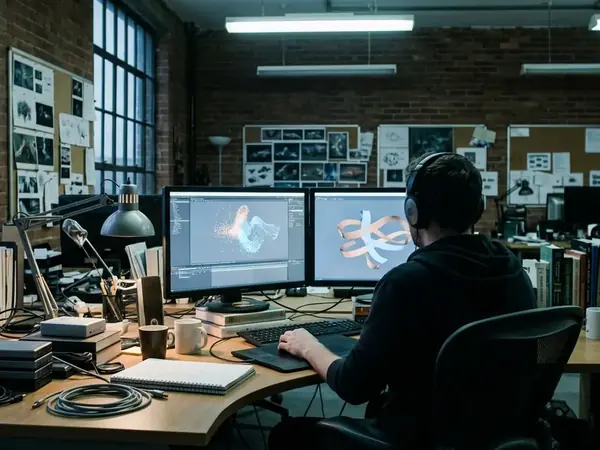
Before I open a design application today, my screen is already flooded with algorithmic suggestions. The era spanning 1998 to 2004 represented the peak of a completely different, decentralized browsing behavior. Creative directors established daily routines of manually checking a fixed list of roughly 10 to 15 bookmarked URLs before beginning production work. They treated inspiration gathering as a deliberate morning ritual.
Dial-up connection speeds capping at 56 kbps required loading heavy interactive sites in background windows for 12 to 15 minutes before they could be viewed smoothly. This friction forced a highly intentional approach to digital design consumption. You did not scroll past a Flash experience; you committed to it. Early motion and interactive studios cultivated inspiration without centralized social media by treating web browsing as an active, investigative discipline.
The Challenge: Creative Isolation and Bandwidth Constraints
Typical interactive project source files ranged from 2MB to 8MB. That sounds trivial now, but those files took upwards of 25 to 40 minutes to transfer over standard file transfer protocols of the era. Aggressive asset compression was required, often limiting embedded audio loops to 11kHz or 22kHz sample rates.
To bypass severe bandwidth limits, studio leads often opted to burn project archives onto physical CD-ROMs and mail them internationally via postal services rather than attempting multi-day server uploads. The sheer physical effort required to share work meant that discovery was never passive. Geographical isolation compounded technical limitations. Without algorithmic recommendations, finding quality work required active hunting through obscure directories and personal connections.
The Solution: Curated Portals and Webrings
Early portal administrators initially attempted automated submission queues based on user voting. They quickly abandoned this approach due to vote manipulation, shifting entirely to manual, invite-only curation. Human editorial judgment proved far superior to early crowd-sourcing for maintaining quality.
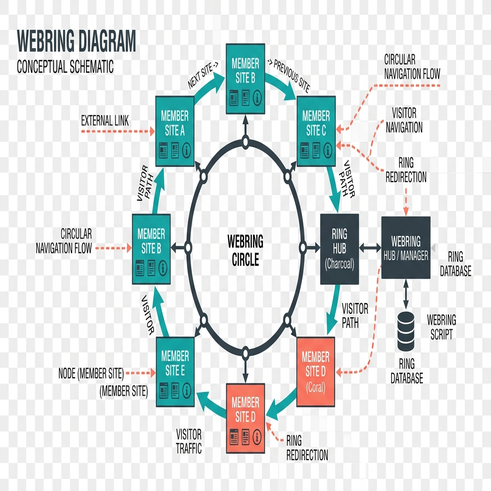
Editorial review cycles for top-tier design portals typically ran on a 48-to-72-hour delay between submission and publication. This delay acted as a quality filter. A standard blogroll or webring usually contained a strictly curated list of around 8 to 12 peer sites. This created a chain of trust—a foundational peer-to-peer endorsement network that guided users from one high-quality studio to another without a centralized search engine.
Implementation: Forums, FTPs, and Open-Source Ethos
The real education happened in the raw code. Message boards served as the primary educational resources for interactive designers. Moderators strictly enforced thread categorization, actively moving any non-technical design critiques out of the coding subforums to maintain a high signal-to-noise ratio for developers.
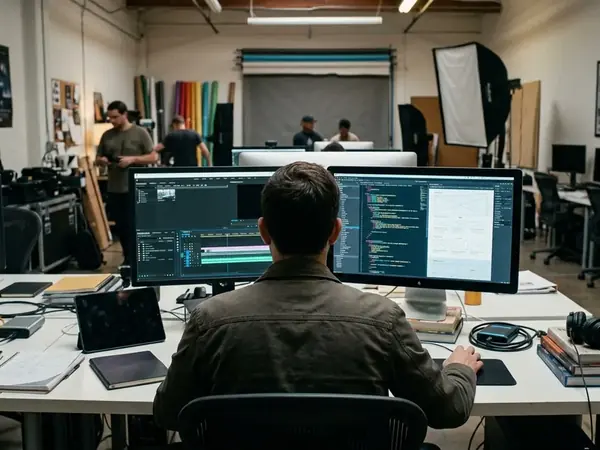
Forum threads dissecting custom inverse kinematics or easing equations often spanned 15 to 20 pages of raw scripting code snippets and mathematical proofs. Studios shared raw source files via private FTP servers to deconstruct complex interactive animations. Source file repositories were typically wiped and refreshed every 30 to 45 days to manage server storage limits.
Pro Tip: The effectiveness of sharing raw project files depends heavily on whether the team enforces standardized naming conventions and modular code structures prior to distribution.
Scope and Limitations of Early Networks
Monthly server hosting costs for high-traffic interactive portfolios frequently exceeded around $400 to $600. This financial burden led many independent creators to take their sites offline after 6 to 8 months. Administrators routinely purged inactive user accounts after roughly 90 days of non-participation to conserve database resources and maintain a highly active core user base.
Cross-checking confirmed that while engagement was deep, the overall reach was statistically narrow compared to modern platforms. The ephemeral nature of the technologies used and the high cost of hosting resulted in lost archives. The loss of these private servers makes the digital preservation of early web art incredibly difficult today.
Key Takeaway: Relying on private servers for source file exchange inherently excluded junior designers who lacked direct introductions to established studio leads.
The Results: High-Fidelity Engagement and Distinct Studio Cultures
Studios deliberately restricted their public portfolio updates to bi-annual releases. They treated each update as a major digital premiere rather than a continuous feed of minor updates. Analytics from early interactive hubs showed average session durations of 8 to 11 minutes per visitor. Users typically viewed 12 to 15 distinct pages per visit, indicating deep engagement with the available content.
This intense, focused sharing led to rapid technical innovation in interactive media. It fostered distinct, highly recognizable studio identities rather than homogenized trends. You could immediately spot the motion-led aesthetic of Exopolis. When acquiring agency McGarrah Jessee handled digital agency of record client SunnyD, the interactive campaigns relied on these established, high-fidelity engagement patterns. Even later hardware-driven experiences like Xbox Kinect Fun Labs drew heavily on the interaction models perfected during this era of focused, bi-annual digital premieres.
Conclusion: Applying Pre-Social Curation to Modern Teams
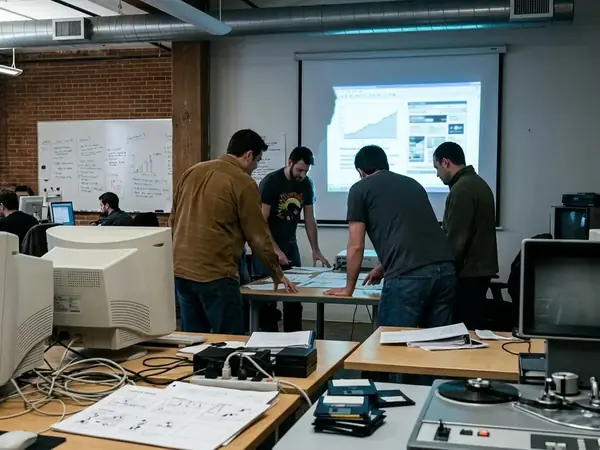
Contemporary design leads are assigning rotating curation roles to team members. They require them to present three deeply researched interactive references during weekly stand-ups to simulate early web discovery. Modern creative teams implementing dedicated, non-algorithmic inspiration repositories require 2 to 3 hours of dedicated curation time per week to maintain relevance and quality.
Warning: Attempting to recreate early web community dynamics using modern enterprise chat tools often results in superficial link-dumping rather than deep technical discourse.
While these historical curation methods are highly effective for focused interactive teams, their rigid structure may bottleneck rapid-response social media workflows. Human editorial judgment remains crucial in design history. Intentional, high-friction curation provides lasting value in a low-friction, high-volume digital world.
Framework for Building a High-Friction Internal Inspiration Repository
- Establish a strict 'no-feed' rule: require team members to manually submit links with a mandatory 50-word technical justification.
- Limit repository additions to a maximum of 5 entries per week to force qualitative filtering.
- Schedule monthly teardown sessions where one submitted project is reverse-engineered and discussed by the entire team.