Table of Contents
- The Emergence of a New Digital Epicenter
- Catalysts of Convergence: SXSW and the Tech Boom
- The Rise of the Independent Boutique Studio
- Talent Migration and Disciplinary Cross-Pollination
- Structural Limitations of the Regional Boom
- The Lasting Legacy on Interactive Media
The Emergence of a New Digital Epicenter
Commercial lease rates in downtown tech corridors ranging from roughly $18 to $24 per square foot annually presented a stark mathematical advantage over coastal monopolies in the mid-2000s, based on available data for the period. Symmetric 10 Mbps to 100 Mbps fiber connections required for heavy media transfers were becoming widely available in Central Texas. Early digital studio founders evaluated coastal real estate costs against emerging broadband infrastructure, ultimately prioritizing locations with redundant fiber-optic loops over physical proximity to traditional advertising hubs.
This calculus established Austin as a fertile ground for independent, digitally-native creative studios. The intersection of motion graphics, interactive web experiences, and early broadband adoption found a natural home here. Agencies could invest capital into rendering hardware rather than exorbitant rent. The resulting geographic shift decentralized commercial digital design, proving that high-fidelity interactive production no longer required a Madison Avenue address.
Catalysts of Convergence: SXSW and the Tech Boom
Instead of purchasing traditional exhibition booth space at annual interactive festivals, creative directors opted to host off-site rendering demonstrations and interactive lounge installations to directly engage audiences. This approach bypassed the noise of the convention floor. During the three- to five-day interactive festival exhibition windows, these hardware setups requiring around 400 to 600 amps of dedicated power for local render farms transformed empty warehouses into immersive brand experiences.
The evolution of SXSW Interactive provided an annual global stage for local boutique studios. A symbiotic relationship formed between Austin's emerging software sector and creative agencies. Case studies of early interactive campaigns, such as those developed for SunnyD, used this local technological infrastructure to execute motion-led web experiences that traditional media buys could not accommodate. By controlling the physical environment and the digital delivery, these studios dictated the terms of audience participation.
The Rise of the Independent Boutique Studio
Studio founders initially attempted to replicate the rigid departmental structures of coastal agencies by separating design, animation, and code. They abandoned this within the first few project cycles. The friction of handing off assets between siloed departments destroyed the fluidity required for interactive motion design.
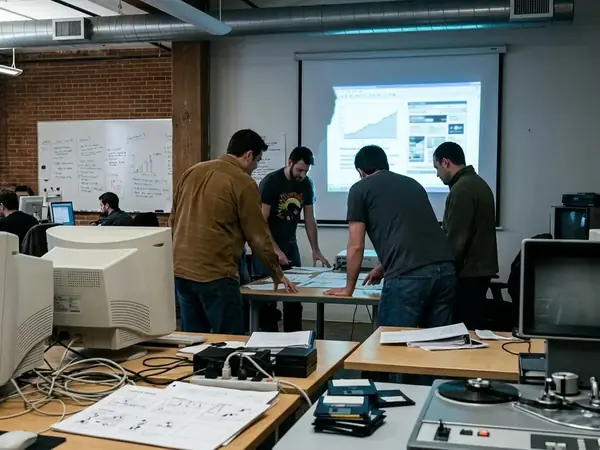
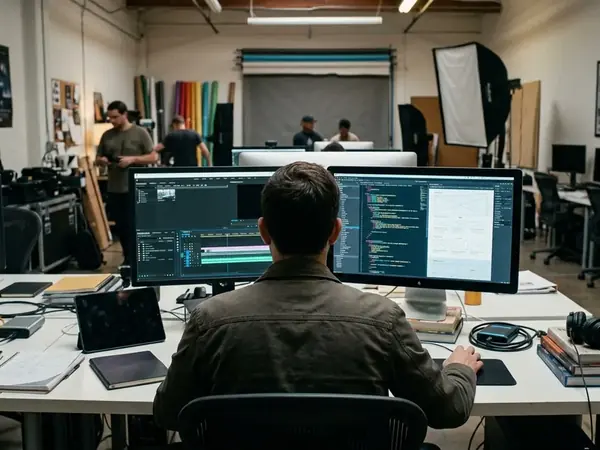
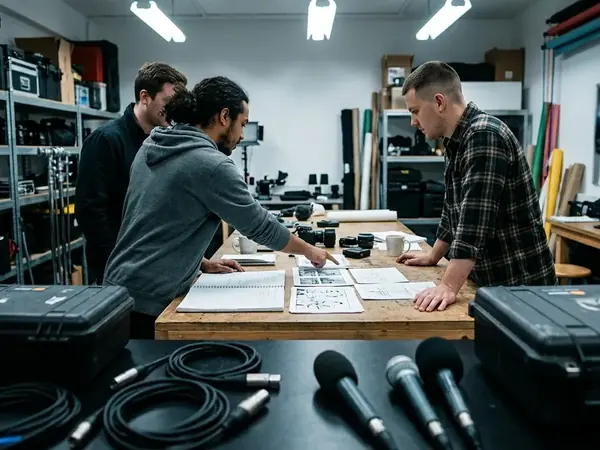
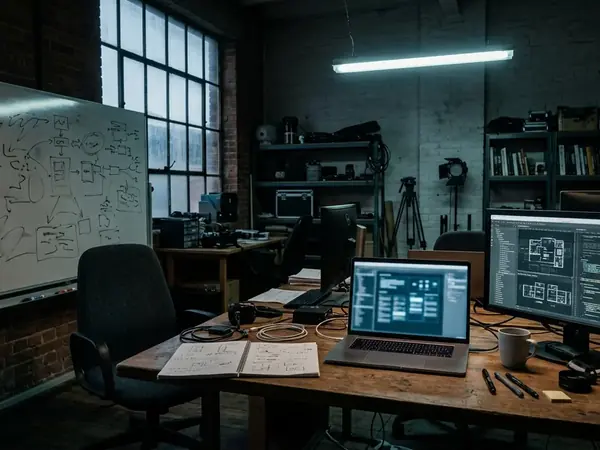
The 'Exopolis-era' studio model emerged as the definitive solution. Agile, multidisciplinary teams operated within open floor plans spanning roughly 3,000 to 5,000 square feet. This architectural and cultural setup facilitated collaborative rendering farms and immediate feedback loops between developers and art directors.

Iteration cycles reduced from 48 hours to same-day turnarounds. Lower overhead costs in Texas allowed for higher risk-taking in digital design and Flash experimentation. When a studio isn't suffocating under operational debt, it can afford to break a few builds in pursuit of a novel navigation mechanic.
Key Takeaway: Structural agility directly correlates with creative output. Removing physical and departmental barriers accelerates the discovery of new interactive paradigms.
Talent Migration and Disciplinary Cross-Pollination
The blurring of lines between cinematic motion graphics and interactive web navigation demanded a new type of practitioner. Hiring managers shifted their recruitment focus away from traditional graphic design portfolios, instead filtering for candidates who demonstrated hybrid capabilities—specifically timeline-based animation combined with programmatic logic. Relocation timelines of around 30 to 45 days for out-of-state hires brought a steady influx of motion designers and ActionScript developers to Central Texas.
Through ongoing multi-year academic partnerships established in the early 2000s, local university design programs fed studio talent pools. Six-month academic pipeline internships feeding directly into junior roles ensured a continuous supply of native digital talent. Agencies like McGarrah Jessee capitalized on this localized expertise to build solid digital experience teams.
But the effectiveness of the multidisciplinary pod model varied heavily depending on the ratio of senior technical directors to junior designers within a given project team. Without experienced technical oversight, ambitious motion concepts frequently collapsed under the weight of browser memory limits.
Structural Limitations of the Regional Boom
In practice, analyzing the scaling challenges faced by independent Austin studios during rapid growth phases reveals distinct infrastructural bottlenecks. When scaling to handle national entertainment campaigns, local studios had to decide between building massive internal server infrastructure or relying on early remote rendering solutions. They opted for the latter, pushing the limits of early cloud computing.
Uncompressed video deliveries exceeding around 500 GB per campaign routinely strained local networks. Client acquisition travel requiring 3 to 4 days per week in coastal hubs highlighted a persistent reliance on Los Angeles and New York for top-tier entertainment and brand client acquisition. The physical distance from decision-makers necessitated exhausting travel schedules for studio leadership.
Warning: Studios that over-indexed on proprietary animation plugins without cross-training staff in standard web technologies faced rapid obsolescence during the mobile transition.
The Lasting Legacy on Interactive Media
The Austin independent model permanently influenced modern remote and distributed creative teams. As proprietary web animation plugins faced industry-wide deprecation, creative directors transitioned their teams' focus toward emerging browser standards, prioritizing the preservation of the 'craft-first' mentality. Transition periods lasting around 18 to 24 months for full technical pivots tested the resilience of these boutique agencies.
Targeting 60 frames per second in native browser-based rendering became the new baseline, ensuring the survival of high-fidelity motion in contemporary UX/UI and WebGL production. Projects like Xbox Kinect Fun Labs demonstrated this enduring commitment to interactive participation, translating the studio ethos into spatial computing.
Pro Tip: When evaluating historical digital campaigns, look past the deprecated technology to study the underlying interaction design principles, which remain highly applicable to modern spatial interfaces.
Maintaining a localized boutique model restricted studios from competing for enterprise-level retainer contracts that demanded 24/7 global support infrastructure. Yet, the city's strategic investment in creative industries ensured its permanent footprint on the history of commercial digital design. The methodologies forged in those open-plan studios continue to dictate how brands build participatory digital experiences today.