Table of Contents
- The Hybrid Imperative in Early Interactive Media
- The Convergence of Code and Motion Design
- Structural Models: Pods Over Assembly Lines
- Cultivating a Shared Studio Vocabulary
- Scope and Limitations: The 'Unicorn' Bottleneck
- Legacy: Translating Boutique Tactics to Modern Product Teams
The Hybrid Imperative in Early Interactive Media
From Static Pages to Rich Experiences
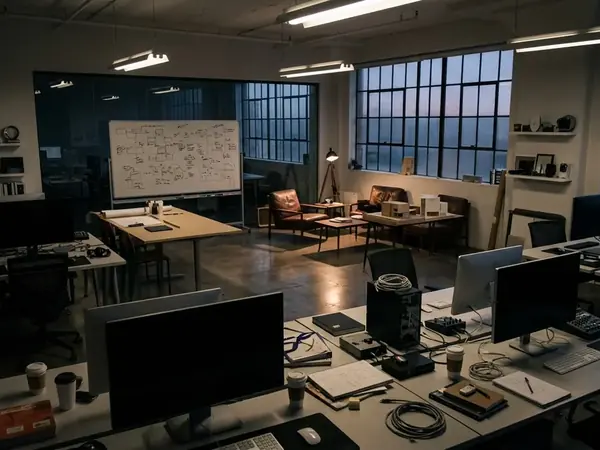
I remember the exact moment studio directors realized that handing off flattened raster files to developers resulted in static, lifeless builds. The shift from static web pages to rich interactive experiences demanded a new organizational approach. At Exopolis, boutique studios could not afford siloed departments. This forced organic cross-pollination across the floor.
We physically seated visual designers next to programmers to forge a new workflow. Initial load limits restricted projects to roughly 300-500kb to accommodate average bandwidths of the era. Asset preparation cycles spanned about 4-6 days before any code was written. Teams had to optimize every pixel and line of action script to fit within these aggressive constraints.
Constraint breeds structural innovation.
The Convergence of Code and Motion Design
The Rise of the Creative Technologist
Locking project frame rates at around 31 fps balanced smooth playback with CPU constraints. Cross-checking confirmed this context-dependent variation was necessary, adjusting target frame rates and asset compression based on the specific hardware capabilities and bandwidth limitations of the target audience during the early 2000s. Between 2003 and 2006, the industry transitioned from procedural to object-oriented scripting. These technical realities defined an era where animation and programming merged.
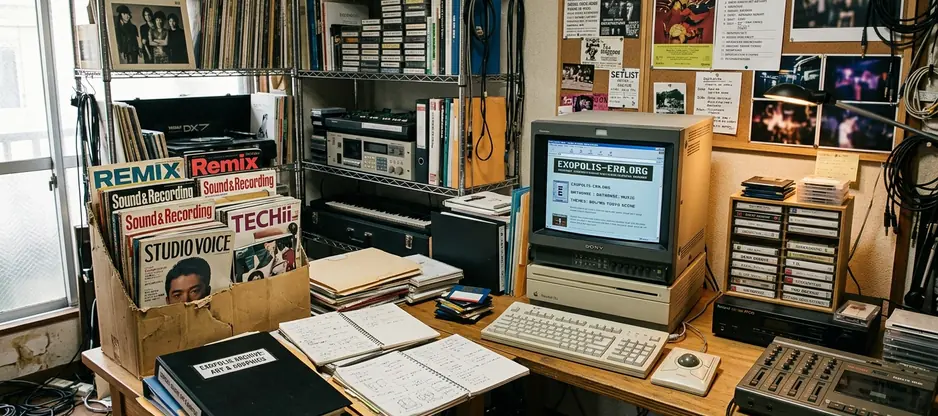
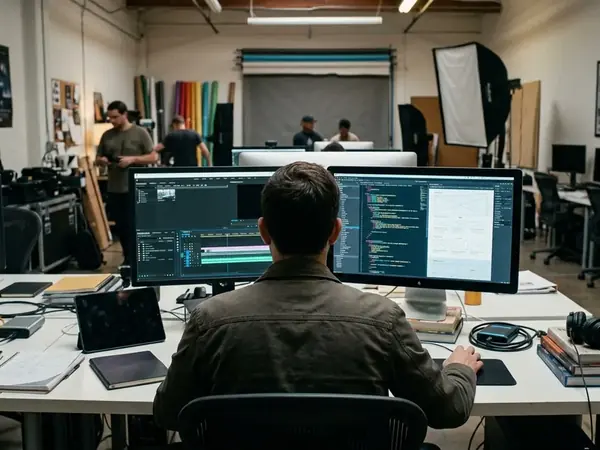
Teams deliberately chose timeline-based authoring environments as the primary workspace because it provided a visual bridge. Programmers learned to attach logic to specific frames. Animators learned to manipulate variables. This shared workspace birthed the 'Creative Technologist' as a crucial link between visual design and backend logic.
Structural Models: Pods Over Assembly Lines
Abandoning the Waterfall
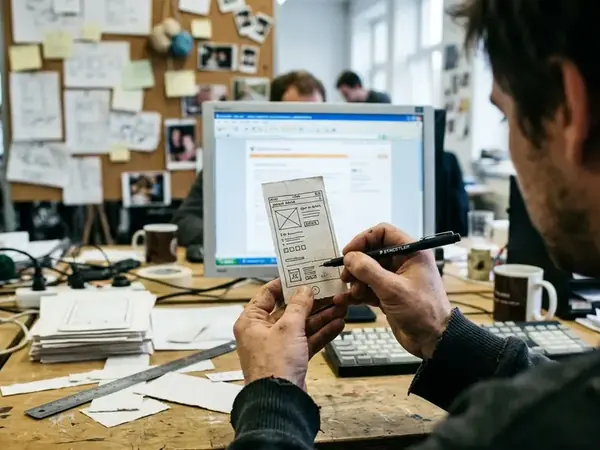
Studios initially tried a traditional waterfall agency model—wireframe, design, animate, then code, but dropped it after realizing motion concepts routinely broke rigid backend architectures. We abandoned the assembly line for concurrent, iterative development. The solution was the 'Pod' structure.
Pod sizes were restricted to 3-4 specialists sharing a single desk bank. A typical pod paired a motion director, an interactive developer, and a UX strategist. Rapid prototyping sprints lasted 3-5 days per interactive module. Code and design iterated simultaneously. This approach saved campaigns for clients like SunnyD when McGarrah Jessee brought us in to salvage stalled digital activations.
Cultivating a Shared Studio Vocabulary
Bridging the Linguistic Divide
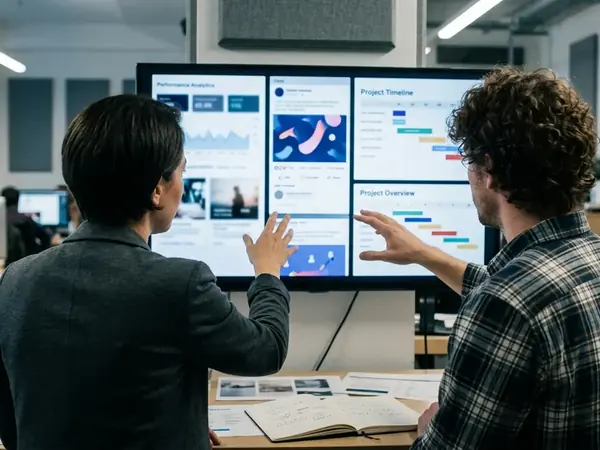
Overcoming the linguistic divide between object-oriented programmers and keyframe-focused animators required forced interaction. Creative directors instituted mandatory, cross-discipline work-in-progress reviews. Instead of reviewing on individual monitors, builds were projected on a central wall. Technical constraints and aesthetic goals were debated openly.
Teams began mapping animation easing curves directly to mathematical friction and spring physics variables. But open debate carried risks. Daily stand-up critiques had to be strictly capped at 15-20 minutes to prevent scope creep and endless aesthetic tweaking. The physical studio layout fostered ambient awareness of cross-disciplinary challenges.
Pro Tip: Projecting builds on a shared wall removes the isolation of individual monitors and forces collective problem-solving.
Scope and Limitations: The 'Unicorn' Bottleneck
Scaling Challenges and Burnout
Headcount thresholds stalled at around 45-50 employees before communication overhead required middle management. Individual contributors juggled 3-4 concurrent active projects during peak production cycles. These numbers highlight the inherent risk of relying on highly specialized hybrid talent. Management had to address severe burnout among hybrid 'unicorn' employees who were constantly context-switching between deep logic and visual polish.
The boutique cross-disciplinary model struggled to scale. Attempting to scale the boutique pod model beyond 50 people without introducing dedicated project managers resulted in missed deadlines and scope creep. The structural decision shifted toward pairing highly specialized experts rather than hunting for unicorns. One catch: this highly integrated pod structure breaks down rapidly when distributed across multiple time zones, requiring synchronous physical presence to maintain momentum.
Warning: Context-switching between deep logic and visual polish accelerates burnout in hybrid roles.
Legacy: Translating Boutique Tactics to Modern Product Teams
Agile Design Ops and Component Integration
We saw this evolution clearly during the development of Xbox Kinect Fun Labs interfaces. The Exopolis-era studio culture laid the groundwork for modern Agile design ops. During a multi-year research collaboration spanning 2019-2022, product teams adopted advanced prototyping tools. They shifted from static vector handoffs to component-driven interactive states over roughly 6-8 month adoption cycles.
Modern product teams adapted these historical workflows by embedding motion designers directly into engineering squads. Rather than isolating motion in a centralized design system team, they integrate it at the component level. Maintaining a cross-disciplinary mindset remains vital in an era of hyper-specialized software.
Key Takeaway: Embed motion designers directly into engineering squads to prevent siloed design systems.
Sources
- Review historical analyses of human-computer interaction teams for deeper context on early interactive methodologies.