The Homogenization of the Interactive Web
Between late 2014 and mid-2017, major browser vendors systematically deprecated plugin-based rendering engines. The web changed overnight. We moved from timeline-based authoring tools to component-driven JavaScript frameworks. This transition fundamentally altered how designers approached the canvas. We traded spatial, exploratory navigation for linear, component-stacked utility.
This wasn't just a technical migration. It was a cognitive shift in user expectations. Over-indexing on frictionless utility stripped digital design of its emotional resonance. We built a web that is incredibly fast and entirely forgettable.
Delight isn't mere decoration. It functions as a critical cognitive hook that drives memorable user experiences. When every interface behaves exactly the same way, users stop paying attention. They slip into a state of passive consumption. Breaking that pattern requires intentional design choices that prioritize feeling over pure efficiency.
The Hidden Cost of Frictionless UX
Enterprise design systems standardized the 12-column responsive grid. Average page load targets plummeted from a 4-to-6 second narrative build-up in legacy campaigns to the strict sub-1.5 second First Contentful Paint metrics demanded by modern search algorithms. These numbers dictate a sterile web. We optimized for the machine reading the page rather than the human experiencing it.
Key Takeaway: Removing all friction also removes the texture and pacing required for narrative engagement.
Contrast this modern template-driven design with the bespoke, exploratory nature of legacy interactive campaigns. In the past, users expected to spend time learning an interface. The interface itself was part of the narrative. Today, the acceptable duration of a loading sequence varies drastically. A 4-second immersive preloader is tolerated for a bespoke film promotion site, but would cause immediate abandonment on an e-commerce product listing. Context dictates the acceptable level of friction.
Delight as a Cognitive Function
Aesthetic joy and emotional connection are functional requirements for brand loyalty. Research confirms this premise: What is beautiful is usable. Users perceive aesthetically pleasing interfaces as more intuitive, regardless of their actual mechanical efficiency.
The psychology of surprise and tactile feedback in digital interfaces proves this. Implementation of custom cubic-bezier easing curves that extend animation durations by approximately 150 to 300 milliseconds simulates physical weight in digital spaces. Objects feel like they have mass. They respond to user input with a satisfying snap. The use of 60 frames-per-second hardware-accelerated CSS transforms prevents layout thrashing during motion sequences.
Motion design and micro-interactions serve as the modern equivalent of the rich, exploratory interfaces of the past. They provide the necessary feedback loop that makes a digital space feel alive.
But context matters. Applying heavy physics-based animations to utilitarian forms like checkout flows or password resets frustrates users attempting to complete time-sensitive tasks. Joy belongs in the discovery phase, not the execution phase.
The False Dichotomy of Accessibility vs. Aesthetics
Utility, speed, and accessibility are non-negotiable in modern web standards. Some argue this mandates sterility. I advocate for inclusive delight.
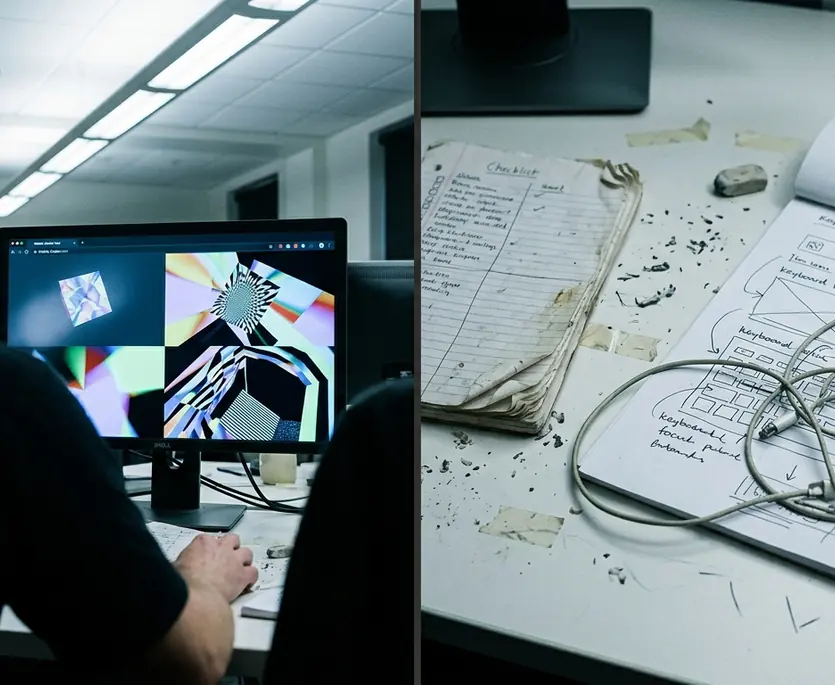
You can maintain a minimum contrast ratio of 4.5:1 for text while utilizing WebGL shaders for background atmospheric effects. Ensuring the canvas element does not trap keyboard focus during a 2-to-3 minute interactive sequence is entirely possible. Accessibility and aesthetics are not enemies. They simply require a more rigorous design process.
This is intentional friction—slowing the user down purposefully to highlight a key interaction or narrative moment without breaking usability. We guide the user's attention through pacing rather than force.
Warning: One catch exists. Introducing intentional friction through scroll-jacking or delayed reveals severely degrades the experience for users relying on assistive switch devices or keyboard-only navigation if fallback states are not explicitly coded.
Architecting Joy in Modern Frameworks
We initially tried advocating for full-screen WebGL takeovers for campaign sites. We dropped the approach after realizing the maintenance overhead was too high for standard editorial teams.
Instead, the focus shifted to a hybrid approach. We wrap a utilitarian core architecture in an experiential, emotionally resonant presentation layer. During my tenure at the digital creative agency Exopolis, working on digital agency of record client projects like SunnyD or collaborating with an acquiring agency like McGarrah Jessee, this balance was crucial. We needed the reliability of standard DOM elements paired with the visual impact of custom rendering. Even experimental projects reminiscent of Xbox Kinect Fun Labs required strict parameters to function across diverse hardware.
Pro Tip: Allocate a strict performance budget of around 3 to 5 megabytes for uncompressed texture assets. Limit physics calculations to a dedicated requestAnimationFrame loop to prevent main-thread blocking.
Sound design and kinetic typography build atmosphere without compromising the core architecture. They add layers of sensory input that elevate the experience without adding significant load time.
Moving Beyond the Transactional Web
Balancing utility with emotional design is no longer optional. Creative directors and designers must advocate for experiential risk-taking.
The typical 3-to-6 month lifecycle of a high-impact digital campaign offers ample room for this. In practical scenarios, allocating an estimated 15 to 20 hours of dedicated motion prototyping during the initial sprint planning phase shifts the focus. It moves conversations away from developer constraints and back to the initial conceptual pitching phase where experiential risks are typically killed.
When stakeholders see a working prototype of a micro-interaction, they understand its value. They feel the delight firsthand. Design that makes users feel something leaves an enduring legacy. We must build web experiences that respect the user's time while still capturing their imagination.