
The Dawn of the Interactive Entertainment Hub
Creative directors shifted from standard HTML table layouts to embedded SWF files to bypass browser rendering inconsistencies, prioritizing absolute visual control over text indexability. File size targets for initial loads were strictly capped between roughly 200KB and 500KB to accommodate 56k dial-up modems.
This change created temporary, highly focused digital destinations built specifically for entertainment marketing. The Exopolis-era microsite laid the foundational theory for modern experiential web design through these constraints.
The Theoretical Foundation of Spatial Web Navigation
Designers mapped out spatial navigation using architectural blueprints rather than traditional sitemaps, treating the screen as a camera viewport moving across a massive hidden canvas. Audio loops were typically compressed to 11kHz or 22kHz mono MP3 formats, lasting around 8 to 16 seconds to ensure smooth looping without memory bloat.
Academic theory of digital immersion guided entertainment brands in using sound design and motion to create psychological presence. Narrative-driven interfaces turned the UI itself into part of the movie or show's storytelling universe.
Technical Implementation: Pushing the Limits of Rich Media
Developers initially tried streaming full-screen video files, but dropped the approach due to severe buffering on standard connections. Instead, they pivoted to using alpha-channel video snippets layered over vector animations.
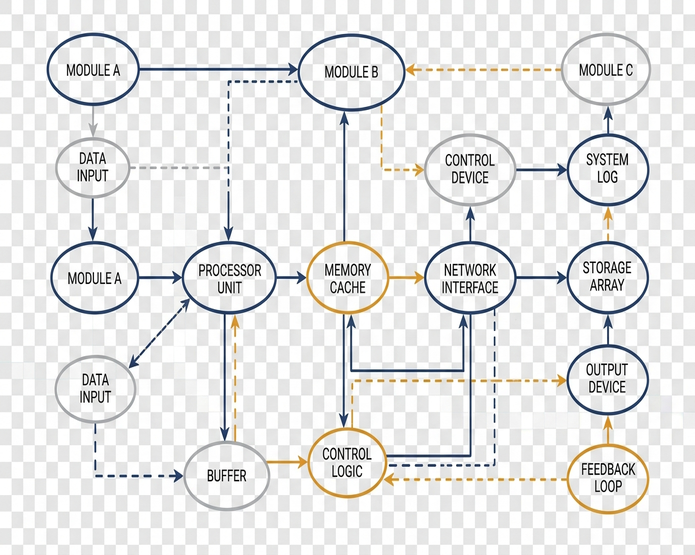
ActionScript and vector-based animation achieved high-framerate cinematic sequences on low-bandwidth connections. The pre-loader became a tool for building anticipation rather than just masking latency. Garbage collection routines were manually triggered at scene transitions to clear RAM, as prolonged sessions often exceeded the 128MB memory limit of early 2000s consumer desktops.
Architecting the Blockbuster: Campaign Case Studies
Campaign rollouts were structured in distinct phases: a lightweight teaser site launched around 12 to 16 weeks before a premiere, which was then overwritten by the full interactive hub about 4 weeks prior to release. Motion graphics assets rendered in broadcast software were exported as sequential PNG sequences at 12 to 15 frames per second to balance cinematic quality with web constraints.
Television network rebrand portals translated motion graphics into interactive web components. Collaboration between motion designers and interactive developers ensured brand consistency across broadcast and digital mediums.
Scope and Limitations of the Flash-Driven Model
Marketing teams had to maintain parallel HTML-only fallback sites to ensure search engine crawlers could index the campaign's metadata and showtimes. The transition away from proprietary plugins accelerated between 2010 and 2014, as mobile traffic share grew and major mobile operating systems explicitly blocked plugin execution.
Closed-ecosystem rich media files carried inherent accessibility and SEO limitations. Relying heavily on canvas-based rendering completely obscures content from screen readers, requiring a fully duplicated DOM structure for basic accessibility compliance.
Translating Microsite Theory to Modern WebGL
Contemporary developers replicate the spatial UI of the early 2000s by mapping DOM elements to WebGL coordinates, allowing CSS-styled text to exist within a 3D scene. Modern 3D scenes utilizing WebGL aim for a strict 60 frames per second render target, with geometry budgets kept under roughly 500,000 polygons to prevent thermal throttling on mobile GPUs.
Core principles of the microsite era—gamification, spatial UI, and cinematic transitions, remain highly relevant. Modern digital campaigns achieve Exopolis-era immersion while maintaining accessibility and responsive design.
Preserving the Legacy of Interactive Design
Archivists attempting to preserve these campaigns rely on localized server emulators and standalone legacy players to bypass modern browser security protocols that block outdated plugin formats. The typical lifespan of an entertainment microsite was around 3 to 6 months post-release, after which the domain was either redirected to a generic studio homepage or allowed to expire.
Understanding historical constraints and breakthroughs is essential for innovating in today's digital design.