Introduction to Transmedia Campaign Architecture
Transmedia production at Exopolis treated campaigns as interconnected narrative ecosystems rather than standalone sites. Campaign lifecycles spanned 12 to 18 months and required integration of 1080p broadcast assets with 30fps interactive web environments. The approach moved past isolated deliverables toward shared story worlds that spanned motion design, interactive web, and broadcast.
Early experiments showed that separate agency silos produced narrative fractures. A single case study illustrates how motion sequences, web portals, and on-air spots could reinforce one another when built from common source material.
The Challenge: Cross-Platform Fragmentation
Average broadband speeds hovered between 1.5 Mbps and 5 Mbps during the 2006-2009 window. Broadcast deliverables required uncompressed 1920x1080 sequences while web counterparts were constrained to 720x480 FLV files capped at around 1500 kbps. These technical mismatches created visible seams whenever viewers moved between television and browser.
Agencies working in isolation compounded the problem. One team optimized for frame-rate fidelity on air; another compressed aggressively for load times. Viewers noticed the shift in color, motion, and resolution.
Strategic Solution: Unified Production Pipelines
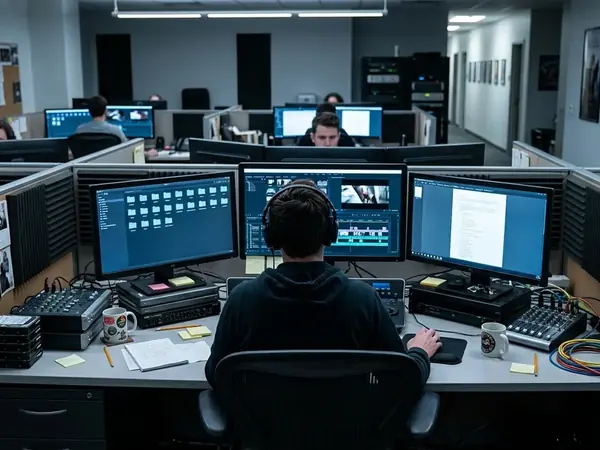
Top-tier studios shifted to a centralized asset generation model. Motion designers and ActionScript developers began collaborating from day one instead of passing finished renders downstream. Asset handoffs occurred at 48-hour intervals. Shared library files exceeded 4GB per campaign module.
Initial attempts to have motion designers render final compressed assets for web developers resulted in severe artifacting and mismatched frame rates. The parallel workflow replaced that handoff model and kept uncompressed sequences as the single source of truth.
Implementation: Engineering the Interactive Environment
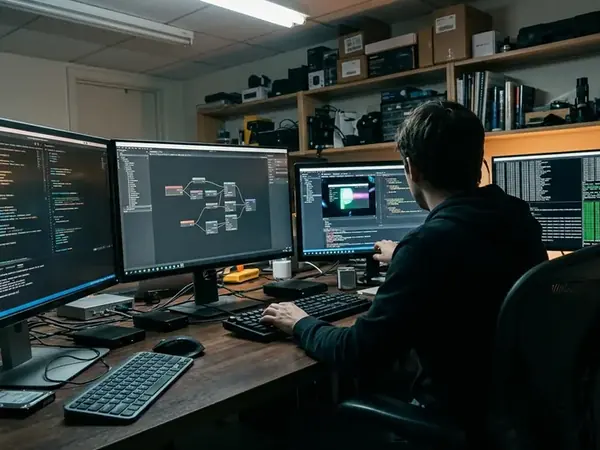
Rich-media hubs relied on a master XML manifest to manage the asset load. Background loading thresholds triggered when the user's cursor remained within 200 pixels of a portal for more than 1.5 seconds. FLV video bitrates stayed between 800 kbps and 1200 kbps depending on narrative demands.
The architecture allowed smooth movement between nodes without preloading everything at once. Interactive hubs crashing due to memory leaks when garbage collection failed to clear unloaded FLV instances prompted tighter instance management. Compression settings also varied: high-motion action sequences received different treatment than static dialogue scenes.
Scope and Limitations of Early Transmedia Models
Production budgets required dedicated server clusters capable of handling around 10,000 concurrent connections. CPU usage frequently maxed out standard dual-core processors during complex 3D transitions. One catch: this centralized asset generation model required the entire creative team to be physically co-located on the same local network, as the daily transfer of multi-gigabyte uncompressed image sequences over standard 2008-era internet connections was entirely unfeasible.
Reliance on proprietary plugins like Flash created long-term fragility. Accessibility suffered when bandwidth-heavy sequences excluded slower connections.
Results: Engagement Metrics and Cultural Impact
Average session durations fell between roughly 11 and 14 minutes, based on available figures. ARG puzzle completion rates required users to visit an average of around 4 to 5 distinct URLs across the campaign ecosystem. Cross-channel conversion improved as viewers followed narrative threads from broadcast into interactive spaces.
These patterns influenced later production thinking even after the technical stack changed.
Summary and Modern Takeaways
Transitioning from siloed production to unified pipelines reduced redundant asset creation by an estimated 300 to 400 billable hours per major campaign. Archival preservation of these sites now requires specialized emulation environments running legacy browser builds from the 2009-2011 period.
Designers today can still apply the principle of shared source libraries and early cross-discipline collaboration. The foundational principles of transmedia storytelling remain relevant when teams coordinate motion, code, and narrative from the outset.